 King of Tyres
If your tyre keeps losing pressure but you cannot see a nail, screw or obvious tyre puncture, the problem should be investigated rather than repeatedly topping the tyre up with air.
A healthy tyre should not need constant reinflation. A slow tyre puncture is one possible cause, but air can also escape through a leaking valve, faulty valve core, tyre bead or damaged wheel.
Some pressure leaks are extremely difficult to spot while the vehicle is parked. You may inflate the tyre, drive normally for several days and then find that the tyre pressure warning appears again.
Below, we explain seven common reasons why a tyre keeps losing pressure, how to identify a possible puncture or air leak, and when you should arrange a professional tyre inspection.
1. A Small Nail or Screw Is Hidden in the Tyre
One of the most common explanations is still a puncture, even when you cannot see one.
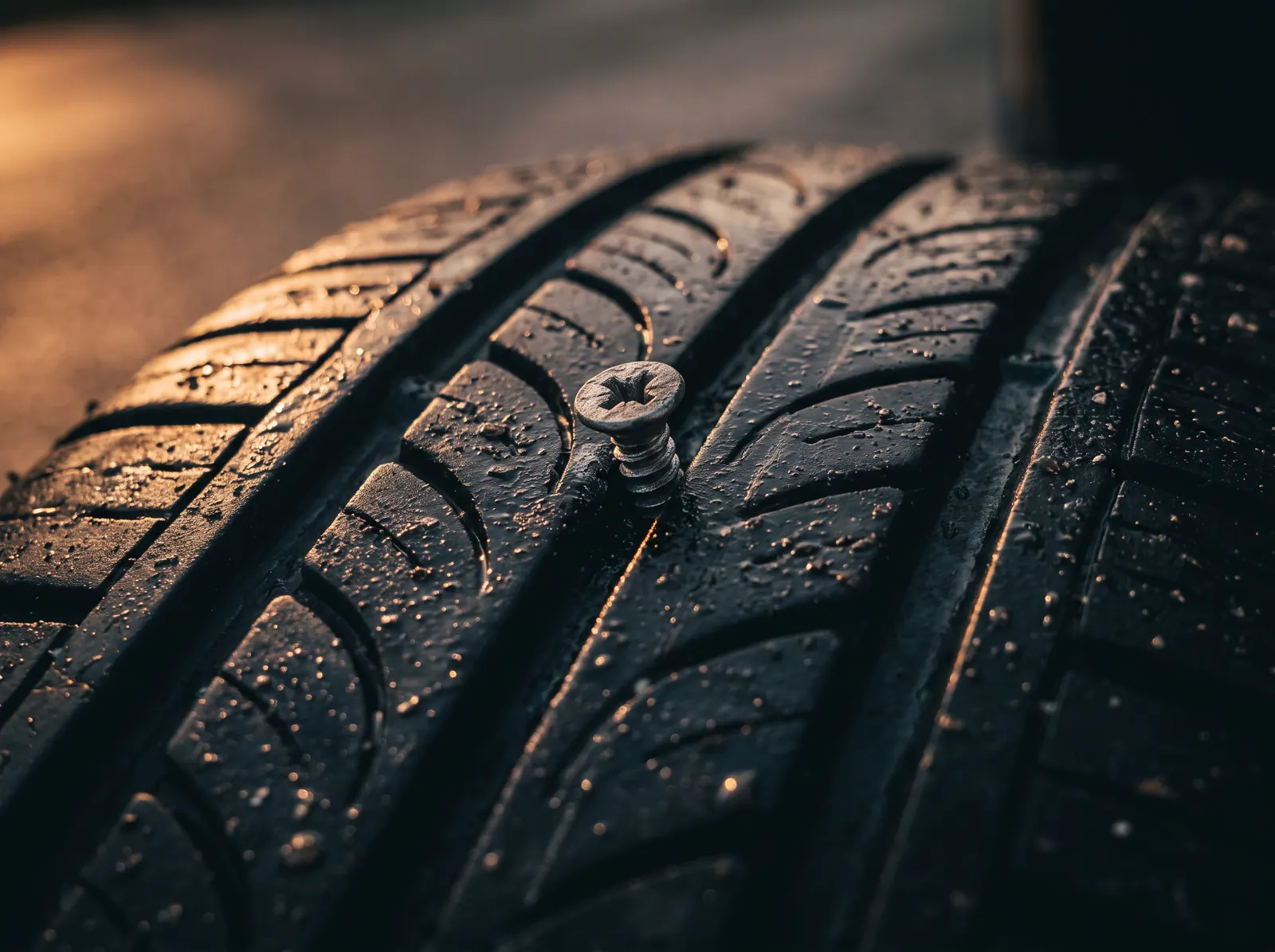
Nails, screws and other small pieces of metal can become embedded deep within the tread.
Unlike a major puncture or blowout, they may not release all the air immediately.
In fact, the object itself can partially seal the hole.
This can create a slow puncture, where the tyre gradually loses pressure over several days rather than becoming completely flat within minutes.
Signs of a slow puncture can include:
- One tyre repeatedly requiring more air
- A TPMS warning returning after the tyre has been inflated
- Pressure dropping noticeably over several days
- A faint hissing sound in some cases
- A nail or screw visible between the tread blocks
- The same tyre consistently showing lower pressure than the others
Do not pull an embedded screw or nail out yourself.
Removing it may allow the tyre to lose air much faster and could leave you with a completely flat tyre.
Instead, have the tyre properly inspected.
Can a punctured tyre be repaired?
Sometimes.
Whether a puncture can be safely repaired depends on factors including its position, size and the overall condition of the tyre.
Damage within an appropriate area of the main tread may potentially be repairable. Damage involving the shoulder or sidewall usually presents a very different situation.
The tyre also needs to be inspected for damage caused by being driven while significantly underinflated.
If your tyre keeps losing pressure after you inflate it, arrange an inspection rather than continuing to top it up indefinitely.
2. The Tyre Valve Is Leaking
If there is no obvious damage to the tread, the next place worth checking is the tyre valve.
The valve is the small component through which your tyre is inflated.
It may look insignificant, but it plays an essential role in keeping air inside the tyre.
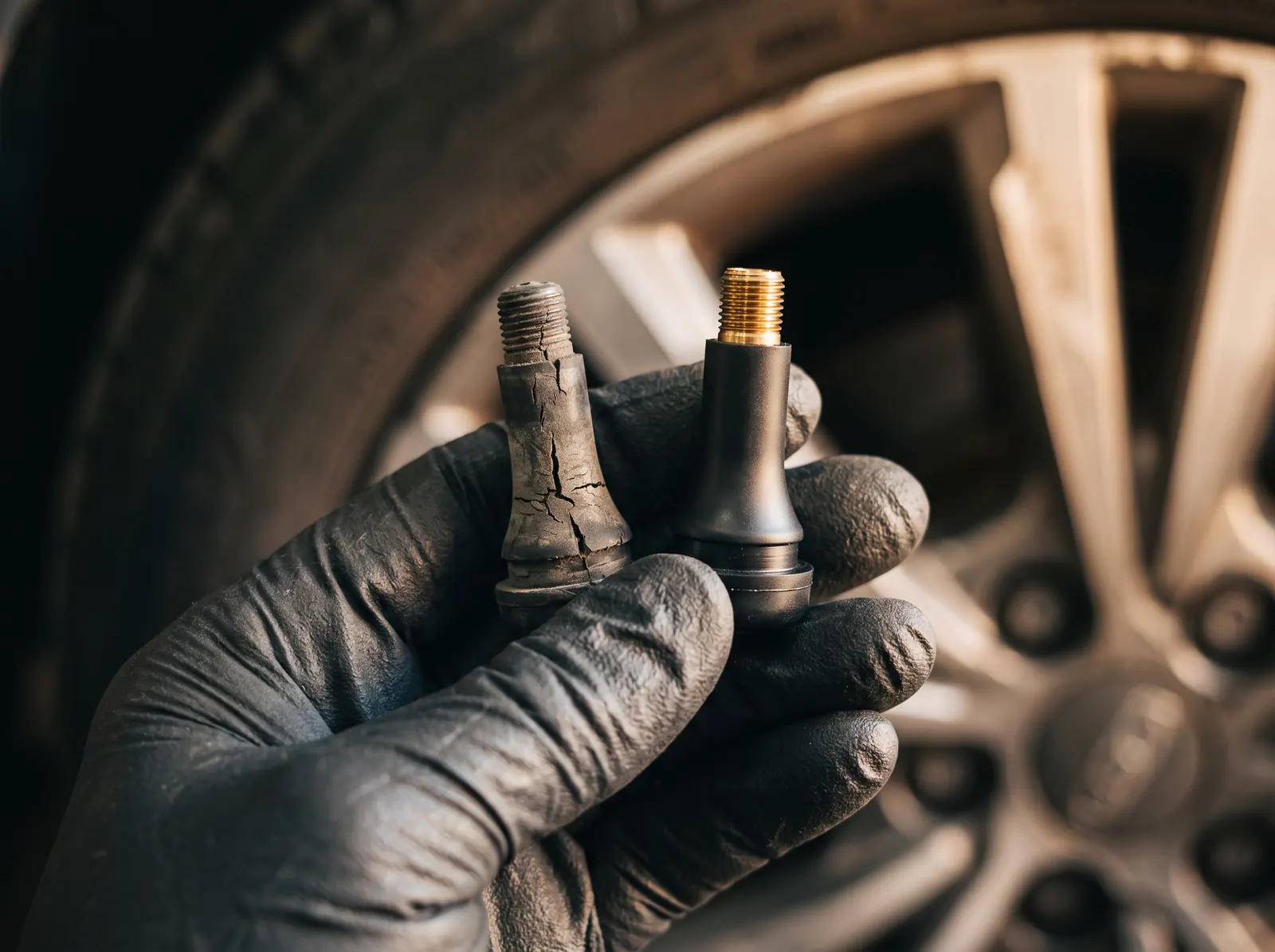
Over time, rubber valves can deteriorate, become damaged or develop a poor seal.
If that happens, air can escape slowly through the valve.
This type of leak is particularly easy to overlook because the tyre itself may appear perfectly normal.
Common signs of a leaking tyre valve
You may have a valve problem if:
- The tyre loses pressure slowly
- There is no visible nail or screw
- The tyre has recently been inflated but goes soft again
- Moving the valve causes air to escape
- The valve appears cracked, damaged or perished
A leaking valve does not automatically mean you need a completely new tyre.
If the valve is responsible and the tyre itself remains serviceable, replacing the faulty valve may solve the problem.
King of Tyres provides mobile tyre valve replacement, allowing the leak to be investigated and, where appropriate, the valve replaced at your location.
3. The Valve Core Is Damaged or Loose
There is another potential problem hidden inside the tyre valve itself.
The valve core is the small internal mechanism that allows air into the tyre while preventing it from escaping afterwards.
If the valve core becomes:
- Loose
- Contaminated
- Damaged
- Worn
- Improperly seated
it may create a gradual air leak.
From the outside, everything may appear normal.
You can therefore have a perfectly healthy-looking tyre and valve while still losing pressure.
This is precisely why visual inspection alone does not always identify the problem.
A technician can check whether air is escaping through the valve assembly and determine whether the valve or valve core requires attention.
4. Air Is Escaping Around the Tyre Bead
The bead is the part of the tyre that seals against the wheel rim.
For the tyre to remain airtight, there needs to be an effective seal between the tyre and the wheel.
If that seal is compromised, the tyre may slowly lose pressure even though there is no puncture through the tread.
This is known as a bead leak.
What can cause a bead leak?
Possible causes include:
- Dirt between the tyre and wheel
- Corrosion around the rim
- Damage to the wheel
- Previous incorrect fitting
- Age-related deterioration
- Impact damage
- Problems with the tyre’s sealing surface
Because the air escapes around the edge of the wheel rather than through an obvious hole in the tread, bead leaks can be difficult for drivers to identify themselves.
Simply adding more air will not resolve the underlying sealing problem.
The source of the leak needs to be located first.
5. Your Alloy Wheel or Rim Is Damaged
London roads are not always kind to wheels.
Potholes, kerbs and road debris can all place considerable force through a tyre and wheel.
Sometimes the tyre survives the impact but the wheel does not escape completely unharmed.
A bent or damaged rim can prevent the tyre from forming a proper airtight seal.
The result may be a tyre that continually loses pressure without displaying an obvious puncture.
Watch for symptoms such as:
- Pressure loss following a pothole impact
- Vibration through the steering wheel
- Visible wheel damage
- A tyre that suddenly begins losing air after hitting a kerb
- Repeated air loss despite no puncture being found
Severe wheel or tyre damage should not simply be ignored because the vehicle still moves.
An impact can potentially affect more than tyre pressure alone.
If the problem began immediately after hitting a pothole or kerb, tell the technician. That information can help narrow down the likely cause.
6. Cold Weather Has Reduced Your Tyre Pressure
Not every reduction in tyre pressure means you have a puncture.
Air pressure changes with temperature.
When temperatures fall, particularly during colder UK autumn and winter weather, the pressure inside your tyres can decrease.
This may be enough to trigger the tyre-pressure monitoring system even though there is no physical leak.
The important distinction is between:
a normal pressure change associated with temperature
and
a tyre that continues losing air after the correct pressure has been restored.
If all four tyres show a relatively similar pressure reduction following a significant temperature change, environmental conditions may be involved.
If only one tyre repeatedly loses pressure, however, a leak becomes more likely.
Do not simply inflate tyres to a random figure
Use the tyre pressure specified by the vehicle manufacturer.
Depending on the vehicle, this information is commonly found:
- Inside the driver’s door area
- On the fuel-filler flap
- In the vehicle handbook
- Within the vehicle’s digital information system
The correct pressure may also vary according to vehicle load.
7. There Is a TPMS Problem
Modern cars commonly use a Tyre Pressure Monitoring System, usually referred to as TPMS.
Its job is to alert you when tyre pressure requires attention.
But occasionally the warning system itself may require investigation.
Depending on the vehicle and system, problems can involve:
- A TPMS sensor
- Sensor battery
- Valve-mounted sensor components
- Incorrect pressure calibration
- A system that has not been correctly reset after pressure adjustment or tyre work
This creates an important distinction.
Your dashboard may be warning you about:
an actual pressure problem
or
a problem associated with the monitoring system.
You should therefore avoid automatically assuming that the warning light itself is faulty.
Check the tyre pressures first.
If one tyre is genuinely losing pressure, find the leak.
If the tyre pressures remain correct but the warning continues, the TPMS system may require further investigation.
Why Does the Same Tyre Keep Losing Pressure?
If one particular tyre repeatedly loses pressure while the other three remain stable, there is a strong reason to investigate that wheel and tyre assembly specifically.
Potential causes include:
- A slow puncture
- A leaking valve
- A faulty valve core
- A bead leak
- Wheel damage
- Tyre damage
- A TPMS-related issue
Repeatedly reinflating the tyre may temporarily hide the symptom, but it does not identify why the pressure is disappearing.
My Tyre Loses Pressure Overnight. What Should I Do?
If a tyre is noticeably losing pressure overnight, do not assume it is safe simply because you can reinflate it.
First, compare its pressure with the manufacturer’s recommended specification.
Then inspect the tyre for obvious signs of:
- Nails
- Screws
- Cuts
- Cracks
- Bulges
- Sidewall damage
- Wheel damage
Also check whether the valve appears damaged.
If you cannot find anything obvious, that does not mean the tyre is airtight.
Slow leaks can require a more thorough inspection to locate.
If the tyre becomes severely underinflated, avoid unnecessarily driving on it simply to reach a tyre shop. Continuing to drive on an underinflated tyre can create additional damage.
A mobile tyre service allows the tyre to be assessed where the vehicle is parked.
Is It Safe to Drive When a Tyre Keeps Losing Pressure?
That depends on how quickly the tyre is losing air, its current pressure and what is causing the problem.
But if you know a tyre cannot reliably maintain its pressure, treating the issue as normal is not sensible.
A significantly underinflated tyre can affect:
- Steering response
- Vehicle stability
- Braking behaviour
- Fuel consumption
- Tyre temperature
- Tread wear
More importantly, driving for an extended period with insufficient pressure can potentially damage the tyre internally.
That may turn what could have been a repairable problem into a tyre that requires replacement.
If the tyre is visibly flat, badly damaged or unsafe to drive on, arrange assistance rather than attempting to continue your journey.
Can I Just Keep Topping the Tyre Up With Air?
Temporarily adding air may allow you to restore the correct pressure, but regularly topping up the same tyre is not a repair.
Think of pressure loss as a symptom.
You still need to identify the underlying cause.
For example:
Nail in tread → puncture assessment
Leaking valve → valve repair or replacement
Bead leak → tyre and rim inspection
Wheel damage → wheel assessment
TPMS warning → pressure check and TPMS diagnosis
Finding the cause early can also help prevent inconvenience later.
It is much better to deal with a slow leak while the car is parked at home than discover a completely flat tyre when you are due at work or preparing for a motorway journey.
How King of Tyres Can Help With a Tyre That Keeps Losing Air
When you cannot tell why the tyre keeps going down, the first objective should be finding the source of the leak.
King of Tyres provides mobile tyre services across North West London, Hertfordshire and surrounding roads including the M1 and M25.
Depending on what the inspection finds, the solution may involve:
Mobile Puncture Repair
If there is a repairable puncture, the tyre may be repaired without requiring a replacement.
Tyre Valve Replacement
If air is escaping through a deteriorated or damaged valve, the valve can be replaced where appropriate.
TPMS Assistance
If the tyre-pressure warning continues or there is a suspected TPMS-related problem, the pressure and monitoring system can be checked.
Mobile Tyre Replacement
If the tyre has damage that cannot be safely repaired, a replacement tyre can be fitted at your location.
Emergency Mobile Tyre Fitting
If your tyre has become completely flat and you cannot safely continue your journey, mobile assistance can come directly to your location.
Tyre Keeps Going Flat? Get the Cause Checked
A tyre that repeatedly loses pressure is telling you something.
It may be a tiny nail.
It may be the valve.
It could be the valve core, tyre bead, wheel or TPMS.
Whatever the cause, continually putting more air into the tyre is not a long-term solution.
King of Tyres can come directly to your home, workplace or roadside location, inspect the problem and determine the appropriate solution.
We provide mobile tyre assistance across areas including Edgware, Colindale, Hendon, Mill Hill, Harrow, Stanmore, Wembley, Barnet, Borehamwood, Watford and St Albans, as well as assistance around the M1 and M25.
Need Help Now?
If your tyre keeps losing pressure:
Call King of Tyres on 07710 006882
Or send us your:
- Location or postcode
- Vehicle registration
- Tyre size, if known
- Photo of the tyre if possible
We can then establish what assistance you need and help get you safely back on the road.
Frequently Asked Questions
Why does my tyre keep losing pressure if there is no puncture?
A puncture is only one possible cause. Air can also escape through a leaking valve or valve core, around the tyre bead or because of wheel damage. Cold weather can also reduce pressure, while TPMS problems can sometimes create confusing dashboard warnings.
Why does only one of my tyres keep losing pressure?
If one tyre consistently loses pressure while the others remain stable, that particular wheel and tyre assembly should be checked for a slow puncture, valve leak, bead problem, tyre damage or wheel damage.
Can a tyre lose pressure without having a nail in it?
Yes. Valve leaks, faulty valve cores, poor sealing around the bead and damaged wheels can all allow air to escape without a nail or screw being present.
How quickly should a tyre lose pressure?
A healthy tyre should not require frequent reinflation. Minor variations can occur naturally, particularly when temperatures change, but noticeable or repeated pressure loss from the same tyre should be investigated.
Why does my tyre-pressure warning keep coming back?
The tyre may genuinely be losing pressure from a slow leak. Alternatively, there may be an issue involving the TPMS. Check the actual tyre pressure rather than repeatedly resetting the dashboard warning.
Can a leaking tyre valve be repaired?
Depending on the type of valve and the fault, a damaged or leaking valve may need to be replaced. A leaking valve does not necessarily mean the tyre itself needs replacing.
Can I drive with a slow tyre leak?
It is better to have the source of the leak identified promptly. If pressure falls significantly, continuing to drive can affect vehicle behaviour and may damage the tyre. If the tyre is visibly flat or unsafe, arrange mobile assistance rather than driving on it.
Can King of Tyres come to my home or workplace?
Yes. King of Tyres provides mobile tyre services, allowing many tyre problems to be assessed and dealt with where the vehicle is parked, provided there is a safe place to work.
What information should I provide when I call a mobile tyre fitter?
Having your vehicle registration, location or postcode and tyre size available can help. A photograph of the tyre and its sidewall markings can also be useful when arranging the correct assistance.
Where can I find my tyre size?
Your tyre size is printed on the tyre sidewall. It will normally look similar to 205/55 R16. If you are unsure, send King of Tyres a clear photograph of the sidewall.
Tyre Losing Pressure Again?
Do not wait until a slow leak becomes a completely flat tyre.
Call King of Tyres on 07710 006882 for mobile tyre assistance across North West London, Hertfordshire and the M1/M25.