 King of Tyres
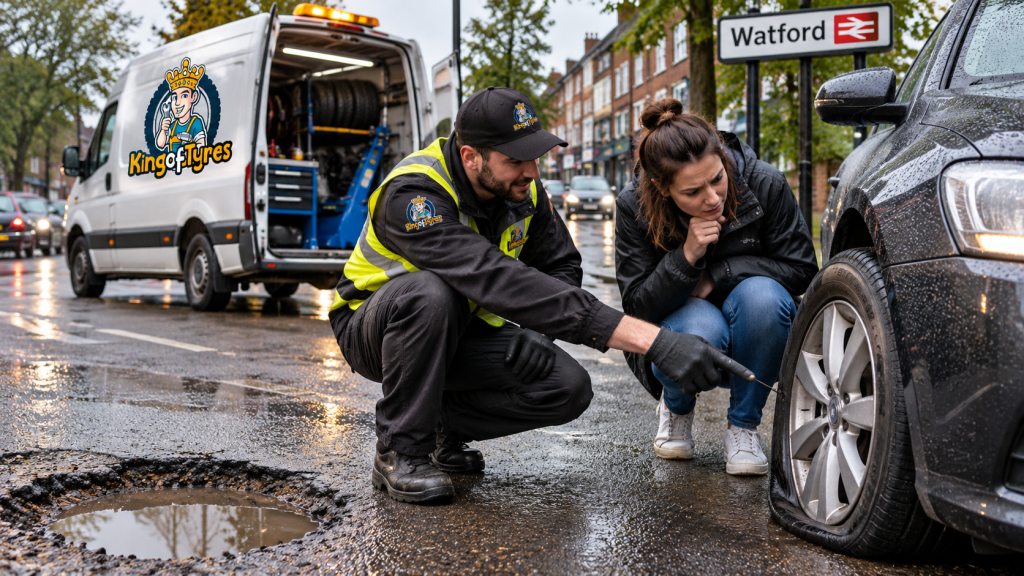
Pothole tyre damage can happen in seconds, often without any immediate warning that something is wrong with your vehicle.
Imagine you’re driving to work on a rainy morning when suddenly, BANG!
Your front wheel drops into a pothole you didn’t see because it was hidden beneath a puddle.
You wince at the noise, grip the steering wheel and continue driving.
The car seems fine. There’s no immediate warning light, and the tyres don’t appear flat.
So you carry on with your journey.
But a few hours later, you notice something unusual: a small bulge on the side of your front tyre.
Should you be worried? Can you still drive home? Or will you need a completely new tyre?
Pothole tyre damage is a serious concern for UK motorists, particularly during periods of heavy rainfall when road defects can become difficult to spot.
Even when your car appears to be driving normally after hitting a pothole, the impact may have caused damage to the tyre’s internal structure, alloy wheel or suspension.
Understanding the warning signs could help you avoid a dangerous tyre failure and an unexpected breakdown.
Pothole Tyre Damage: A Typical Morning in Watford
Imagine you’re commuting from Watford to your office in North West London.
It’s 8.15 am on a wet Tuesday morning. Traffic is moving slowly along a busy local road, and you’re already running late.
You approach a puddle near the kerb.
It doesn’t look particularly deep, so you continue at the speed of the surrounding traffic.
Suddenly, your front passenger-side wheel hits something hard.
The impact makes a loud thud, and you feel it through the steering wheel.
You immediately wonder whether you’ve damaged the car.
But nothing obvious happens. The tyre pressure warning light stays off, and the car continues moving normally.
You reach work and park as usual.
Later that morning, while walking back towards your car, you notice an unusual swelling on the tyre sidewall.
It looks like a small bubble.
You search online:
“Can I drive with a bulge in my tyre after hitting a pothole?”
Now you’re facing an unexpected problem.
You’re supposed to collect your children after work, you have meetings throughout the afternoon, and the nearest tyre garage may not have an appointment available.
The important thing to understand is that a tyre can suffer serious internal damage even when it hasn’t immediately gone flat.
This is an illustrative scenario, but it reflects a situation many UK drivers could encounter.
Why Potholes Are a Growing Concern for UK Drivers
Potholes are not simply an inconvenience.
They can damage tyres, wheels and suspension components, sometimes leaving motorists with expensive repairs and vehicles that are unsafe to drive.
According to research published by the AA on 10 March 2026, its patrols attended 17% more pothole-related incidents in January 2026 than in January 2025.
The AA also surveyed 13,045 members in February 2026 and found that only 48% felt prepared to cover the unexpected cost of replacing a tyre.
These figures highlight how easily pothole damage can create an unplanned expense.
For drivers who rely on their cars for commuting, school runs, family responsibilities or business appointments, the inconvenience can be just as frustrating as the repair bill.
The reality is that even a short journey along a familiar road can become problematic when poor road conditions cause unexpected tyre damage.
What Damage Can a Pothole Cause to Your Car?
When your wheel hits a pothole, the tyre is suddenly compressed between the wheel rim and the edge of the road defect.
Depending on the speed, depth of the pothole, tyre condition and angle of impact, several components may be affected.
1. Tyre Sidewall Damage
The tyre sidewall is the part between the tread and the wheel rim.
It flexes as you drive and helps support the vehicle’s weight.
A hard impact can damage the internal cords that provide structural strength.
Sometimes this damage appears as a visible bulge or bubble on the tyre’s outer surface.
A bulge associated with structural failure is particularly dangerous because the tyre may no longer be able to withstand normal driving forces.
2. Cuts and Tears in the Tyre
The sharp edge of a pothole can cause cuts or tears in the tyre rubber.
Some may be visible immediately.
Others may require a closer examination to determine whether the tyre’s internal cords have been damaged.
Deep cuts reaching the tyre’s structural reinforcement can make replacement necessary.
3. Alloy Wheel Damage
Potholes can also damage the wheel itself.
A strong impact may bend or crack an alloy, particularly when the tyre is compressed heavily against the rim.
A damaged wheel may contribute to air escaping from the tyre or create vibration while driving.
4. Wheel Alignment Problems
A pothole impact can disturb the vehicle’s wheel alignment.
You might notice the steering wheel no longer sits centrally or the car seems to pull towards one side.
Incorrect alignment can also contribute to uneven tyre wear.
5. Suspension Damage
Your vehicle’s suspension is designed to absorb normal road irregularities.
However, a severe impact may damage suspension components, including springs, shock absorbers and related parts.
Symptoms can include unusual knocking noises, instability or changes in how the vehicle handles.
Not every pothole causes serious damage, but a heavy impact should never be ignored when the vehicle begins showing unusual symptoms.
Why a Bulge in Your Tyre Sidewall Is So Dangerous
One of the most important signs of pothole tyre damage is a visible bulge in the sidewall.
It may look like a small lump, bubble or swelling.
Some drivers assume that if the tyre still holds air, it must be safe.
Unfortunately, that’s not necessarily true.
A pothole impact can weaken or break the internal reinforcement cords.
The air pressure inside the tyre then pushes against the weakened area, causing the sidewall to bulge outwards.
This indicates that the tyre’s structure may have been compromised.
Under the Driver and Vehicle Standards Agency’s MOT inspection rules, a tyre with a bulge caused by structural separation or failure is classified as having a dangerous defect.
Such a tyre may fail suddenly, potentially causing the driver to lose control.
Can You Drive With a Bulge in Your Tyre?
No. If you discover a sidewall bulge that may indicate structural damage, do not continue driving.
You should arrange professional assessment and replacement rather than attempting to drive home or to a garage.
If the car is already parked safely, leave it where it is until appropriate assistance arrives.
If you notice the problem while travelling, avoid sudden steering or braking movements and stop at a safe location as soon as possible.
Never assume a tyre is safe simply because it is still inflated.
7 Warning Signs of Pothole Tyre Damage
Not every problem will be immediately visible.
After a substantial pothole impact, look out for the following warning signs.
1. A Bulge or Bubble on the Tyre Sidewall
This can indicate internal structural failure.
Do not drive on a tyre with a suspected structural bulge. Arrange professional assistance.
2. A Tyre That Suddenly Loses Pressure
A sharp impact may damage the tyre, rim or seal between them.
If the tyre pressure warning appears or the tyre looks deflated, stop safely and seek an assessment.
3. Vibration Through the Steering Wheel
Unusual vibration may indicate wheel damage, tyre deformation, imbalance or another mechanical issue.
4. The Car Pulling to One Side
If the vehicle begins drifting to one side or the steering wheel feels off-centre, the impact may have affected wheel alignment or another component.
5. Visible Cuts or Tears
Inspect the tyre from a safe position for obvious damage.
Do not attempt to probe deep cuts or dismantle the wheel yourself.
6. Unusual Knocking or Rattling Noises
New noises after hitting a pothole may indicate damage to the wheel or suspension.
7. Uneven Tyre Wear Appearing Afterwards
Sometimes the effects of an impact become noticeable over time.
Uneven tyre wear may indicate alignment or suspension issues that need investigating.
If you’re unsure whether your vehicle is safe, arrange a professional inspection before driving it further.
Can Pothole Tyre Damage Be Repaired, or Do You Need a New Tyre?
This is one of the first questions drivers ask after discovering tyre damage.
Unfortunately, not every damaged tyre can be repaired.
Whether a repair is appropriate depends on the location, extent and nature of the damage.
| Type of damage | Likely next step |
| Structural sidewall bulge | Replace the tyre |
| Deep sidewall cut affecting cords | Replace the tyre |
| Minor superficial mark | Professional assessment |
| Small puncture in the permitted tread repair area | May be repairable if inspection confirms it is safe |
| Damaged or cracked alloy wheel | Wheel inspection and repair or replacement as appropriate |
| Steering or suspension problem | Mechanical inspection and any required repairs |
A puncture repair is not an appropriate solution for a tyre whose internal structure has been damaged by a pothole.
Similarly, simply reinflating a tyre with suspected structural damage does not make it safe.
If a pothole has caused a structural bulge or significant sidewall damage, tyre replacement is normally necessary.
A qualified tyre professional can assess the damage and advise on the appropriate next step.
What Should You Do Immediately After Hitting a Pothole?
If you’ve just struck a pothole, your next actions depend on how your car is behaving and where you are.
Step 1: Stay Calm and Maintain Control
Avoid sudden braking or swerving, particularly in heavy traffic.
If the vehicle feels unstable, reduce speed smoothly and look for a suitable place to stop.
Step 2: Stop Somewhere Safe
If you’re travelling on an ordinary road, stop in a safe location away from moving traffic where possible.
Do not pull over somewhere that creates an additional hazard.
If you’re on a motorway or major high-speed road, follow National Highways’ breakdown advice.
Try to reach a motorway service area or exit if the vehicle remains safe to control.
If you cannot leave the motorway, move to a designated emergency area or hard shoulder where possible and follow official safety instructions.
If you’re stranded in a live lane or cannot reach a place of relative safety, call 999 and ask for the police.
Step 3: Check for Obvious Damage
Only inspect the vehicle when it is safe to do so.
Look for visible tyre bulges, cuts, a flat tyre or wheel damage.
Remember that some defects cannot be identified by a simple visual check.
Step 4: Don’t Continue Driving on a Dangerous Tyre
If you discover a sidewall bulge, significant cut, flat tyre or other serious defect, do not attempt to drive to a tyre garage.
Arrange roadside assistance or mobile tyre support at a safe location.
Step 5: Contact a Mobile Tyre Professional
Explain what happened and describe the visible damage.
Provide your location, vehicle registration and tyre size where possible.
A mobile tyre technician may be able to assess the tyre and fit a suitable replacement without you needing to drive the damaged vehicle.
Step 6: Arrange Further Checks if Necessary
Even after a tyre has been replaced, the pothole impact may have affected the wheel, alignment or suspension.
If the steering feels unusual, there are new noises or the vehicle vibrates, arrange a suitable mechanical inspection before returning to normal use.
What If You Discover Tyre Damage While You’re at Work?
Let’s return to the driver in Watford.
The car is safely parked at the office, but a bulge has appeared in the front tyre.
Driving home would be unsafe.
However, the driver still needs the car for the journey home and has no spare tyre available.
This is where mobile tyre fitting can be a practical alternative to arranging a garage visit.
Instead of driving the damaged car, the driver can contact a mobile tyre specialist and explain the situation.
Subject to the location, suitable tyre availability and safe working conditions, a technician can attend the vehicle, assess the damage and replace the tyre where it is parked.
For busy commuters, this can be particularly useful because the service comes to the vehicle rather than requiring the driver to travel to a garage.
How King of Tyres Can Help With Pothole Tyre Damage
At King of Tyres, we understand how frustrating it can be when an unexpected tyre problem interrupts your day.
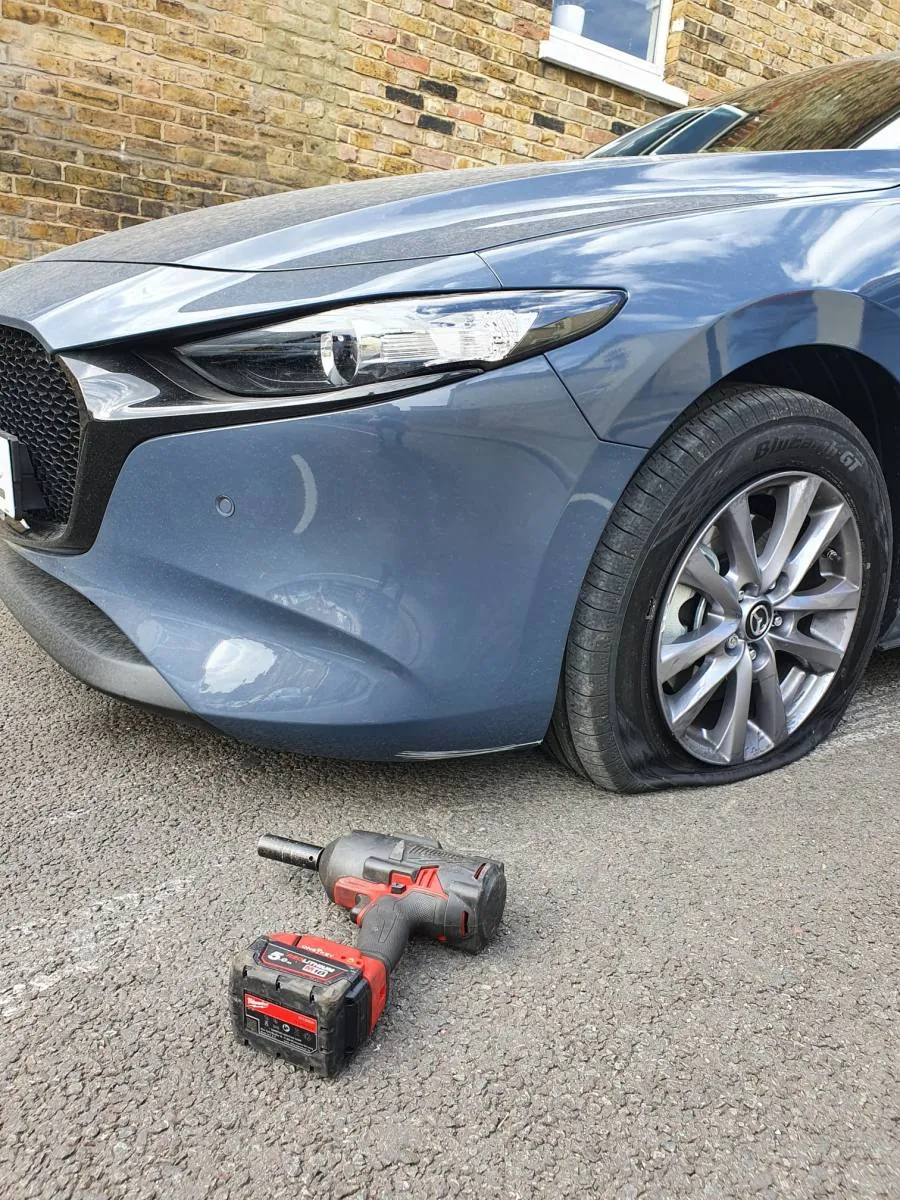
You might have hit a pothole on your morning commute, discovered tyre damage outside your workplace or found a flat tyre after returning to your parked car.
Whatever the situation, the last thing you need is the added pressure of trying to drive a damaged vehicle.
King of Tyres provides 24/7 mobile tyre fitting and replacement services across North West London, Watford and surrounding areas of Hertfordshire.
Mobile Tyre Assessment and Replacement
If your tyre has been damaged by a pothole, our mobile tyre technicians can attend an appropriate location and assess whether a safe repair is possible or replacement is required.
Where the tyre is structurally damaged, fitting a suitable replacement is generally the appropriate solution.
Tyre Fitting at Home or Work
You don’t necessarily need to take your vehicle to a garage.
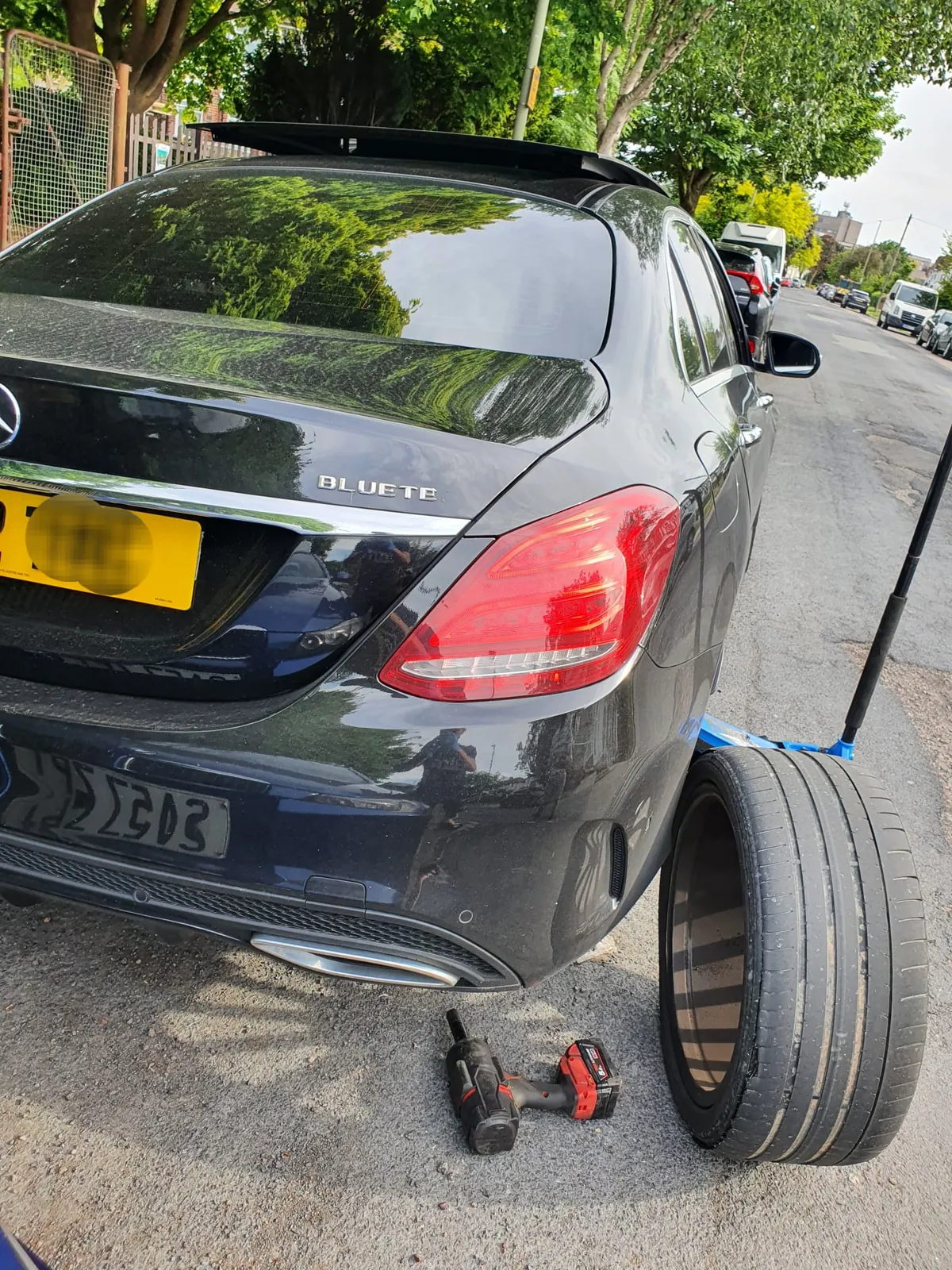
Our mobile fitting service can attend homes, workplaces and other suitable locations where the work can be carried out safely.
This is particularly helpful if you’ve discovered tyre damage while your car is parked.
Emergency Mobile Tyre Assistance
Pothole damage doesn’t always happen during normal business hours.
King of Tyres advertises 24-hour mobile tyre assistance, including evenings, weekends and bank holidays.
Availability and arrival times depend on your location, road conditions, technician availability and the tyre required.
Tyres for Different Vehicles
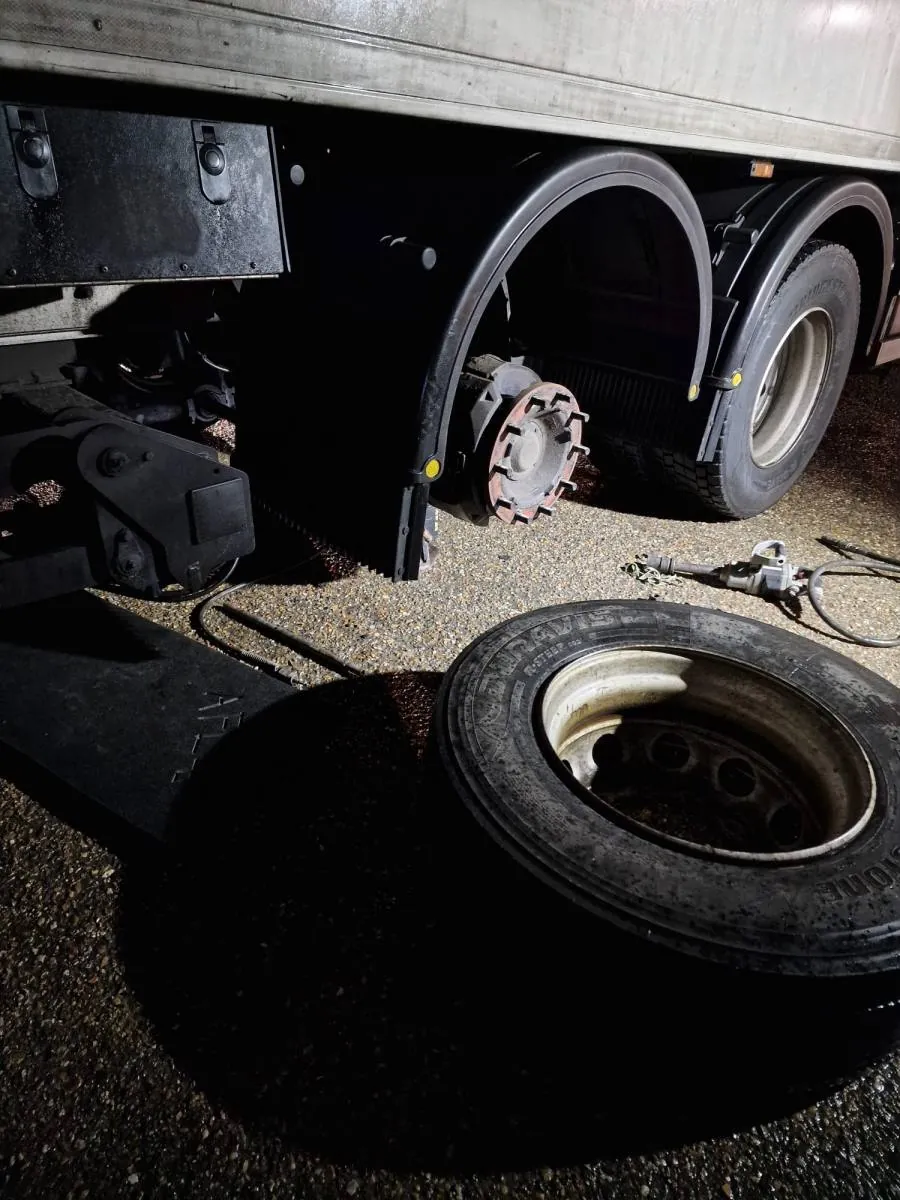
King of Tyres advertises mobile fitting for cars, vans, SUVs, electric vehicles and commercial vehicles.
Our team can discuss the tyre size and specification required for your vehicle before attending.
If you suspect wheel, suspension or alignment damage, a separate mechanical assessment may also be required.
The aim is to help you resolve the tyre problem safely and get your vehicle back on the road when it is roadworthy.
How to Reduce the Risk of Pothole Tyre Damage
You cannot control the condition of every road you travel on.
However, some driving habits can reduce the risk of damage.
Keep a safe distance from the vehicle ahead. This gives you more time to spot potholes and other road hazards.
Reduce your speed on damaged roads. Higher impact forces can increase the risk of damage.
Be careful around puddles. Water may conceal the depth of a pothole.
Maintain the correct tyre pressure. Under-inflated tyres may be more vulnerable to damage and can affect handling and braking.
Check your tyres regularly. Look for cuts, bulges, uneven wear and changes in pressure.
Avoid sudden swerving. An unpredictable manoeuvre can create a greater danger than the pothole itself.
Arrange an inspection after a severe impact. Even if the tyre appears intact, unusual steering, vibrations or noises should be investigated.
Can You Claim Compensation for Pothole Tyre Damage?
Depending on the circumstances, drivers may be able to seek compensation from the authority responsible for maintaining the road.
However, compensation is not automatic.
A claim will depend on the evidence, the condition of the road, the relevant highway authority’s maintenance responsibilities and the applicable legal tests.
If it’s safe to do so, useful evidence may include:
- The location of the pothole.
- Photographs of the road defect.
- Photographs of vehicle damage.
- The date and approximate time of the incident.
- Tyre replacement invoices.
- Inspection reports identifying the damage.
Do not put yourself at risk by standing in traffic or returning to a dangerous location to photograph a pothole.
Drivers can report potholes and learn about potential claims through the relevant highway authority.
The RAC also provides a practical guide to reporting potholes and claiming for vehicle damage.
Frequently Asked Questions About Pothole Tyre Damage
Can hitting a pothole damage a tyre without making it flat?
Yes. A pothole impact can damage the tyre’s internal structure without causing immediate air loss. A bulge or other signs of damage may become apparent after the impact. Arrange an inspection if you suspect a problem.
Is it safe to drive with a tyre bulge after hitting a pothole?
No. A bulge caused by structural damage is a dangerous defect. Do not continue driving. Arrange professional assistance and replacement.
Can pothole tyre damage be repaired?
Minor damage or a separate puncture may be repairable if a qualified technician confirms that it meets the appropriate repair standards. Structural sidewall damage, including a bulge, is not suitable for an ordinary puncture repair.
Can a pothole damage alloy wheels?
Yes. A severe impact can bend or crack an alloy wheel. This may cause air leakage, vibration or other problems requiring professional assessment.
How do I know if a pothole damaged my suspension?
Possible warning signs include knocking noises, unusual bouncing, steering changes and poor handling. A qualified mechanic should inspect the vehicle if these symptoms appear after an impact.
Can King of Tyres replace my damaged tyre at work?
King of Tyres advertises mobile tyre fitting at homes, workplaces and other safe locations in its service area. Contact the team with your location, vehicle details and tyre size to confirm availability.
Do I need to replace both tyres on the same axle?
Not necessarily. This depends on tyre condition, tread depth, vehicle manufacturer requirements and compatibility. Some vehicles, particularly certain all-wheel-drive models, may have additional matching requirements. A tyre professional can advise.
Don’t Ignore Pothole Tyre Damage Just Because Your Car Still Drives
Hitting a pothole is frustrating, especially when you’re already rushing to work or managing a busy day.
But the real problem may not be the noise or impact you feel at the time.
It’s the damage that could be left behind.
A weakened sidewall, damaged alloy wheel or suspension problem may not become obvious immediately.
That’s why it’s important to take unusual tyre bulges, cuts, vibrations and changes in handling seriously.
If your tyre has suffered structural damage, continuing to drive can put you and other road users at risk.
Fortunately, you don’t necessarily need to drive your damaged vehicle to a garage to get help.
Hit a Pothole and Damaged Your Tyre? Call King of Tyres
If you’ve discovered a damaged tyre after hitting a pothole in Watford, Harrow, Edgware, Wembley or the surrounding areas, King of Tyres can help you explore your mobile tyre replacement options.
Our mobile tyre fitting service is available 24 hours a day, subject to location, technician availability and safe working conditions.
Whether your car is parked at home, outside your workplace or at a suitable roadside location, contact our team to discuss the problem.
Don’t risk driving on a damaged tyre. Get professional help where your vehicle is.
Call King of Tyres: 07710 006882
Email: info@kingoftyres.co.uk
Tell us your location, vehicle registration and tyre size, and describe or send a photograph of the damage if you can do so safely.