 King of Tyres
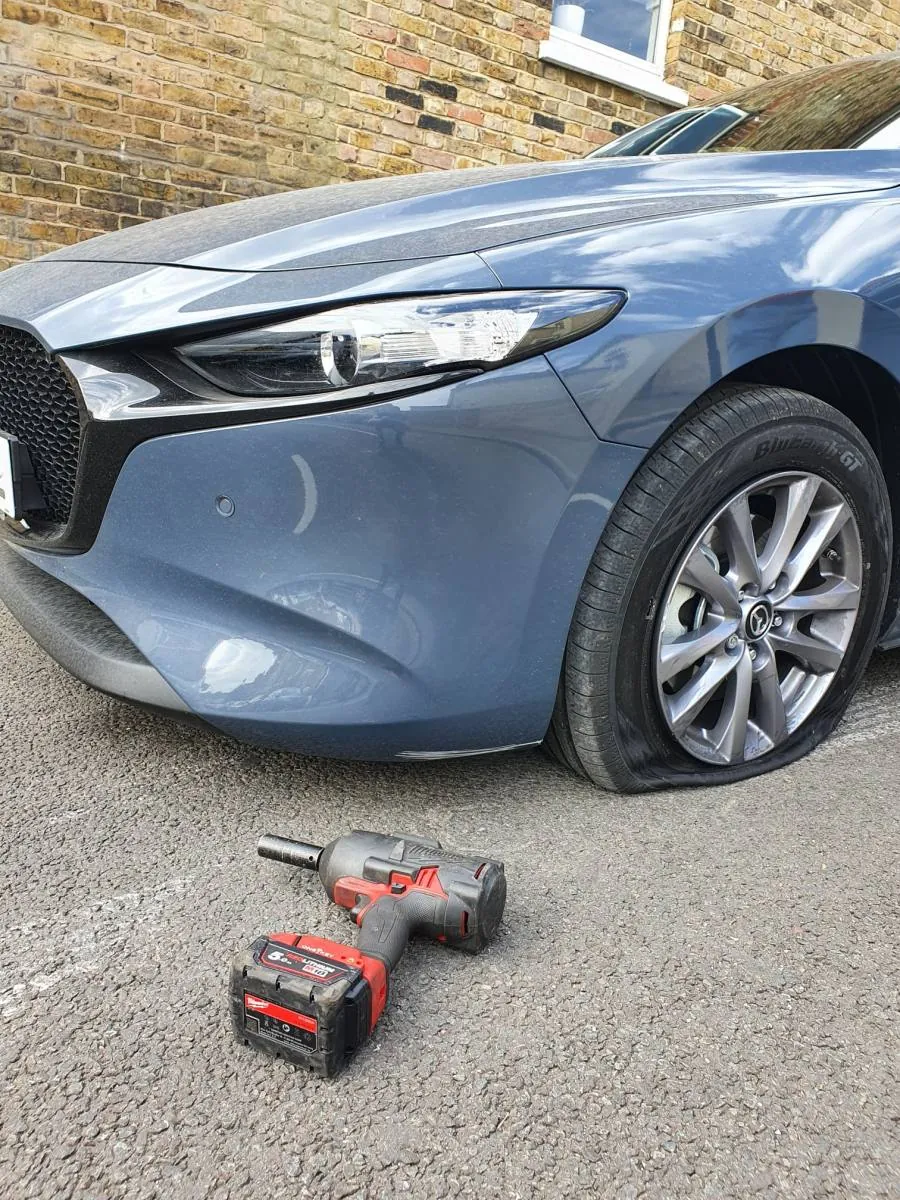
You walk out to your car and one tyre looks slightly lower than the others.
Maybe a warning light has appeared on the dashboard.
Perhaps you filled the tyre with air three days ago and the pressure has dropped again.
Or worse, you have just heard the unmistakable sound of a flat tyre while you are miles from home.
The first question most drivers ask is:
“Can this tyre be repaired, or am I going to need a new one?”
The answer depends on far more than whether there is simply a hole in the tyre.
The location of the puncture, size of the damage, condition of the sidewall, remaining tread depth and whether the tyre has been driven while underinflated can all determine whether a safe repair is possible.
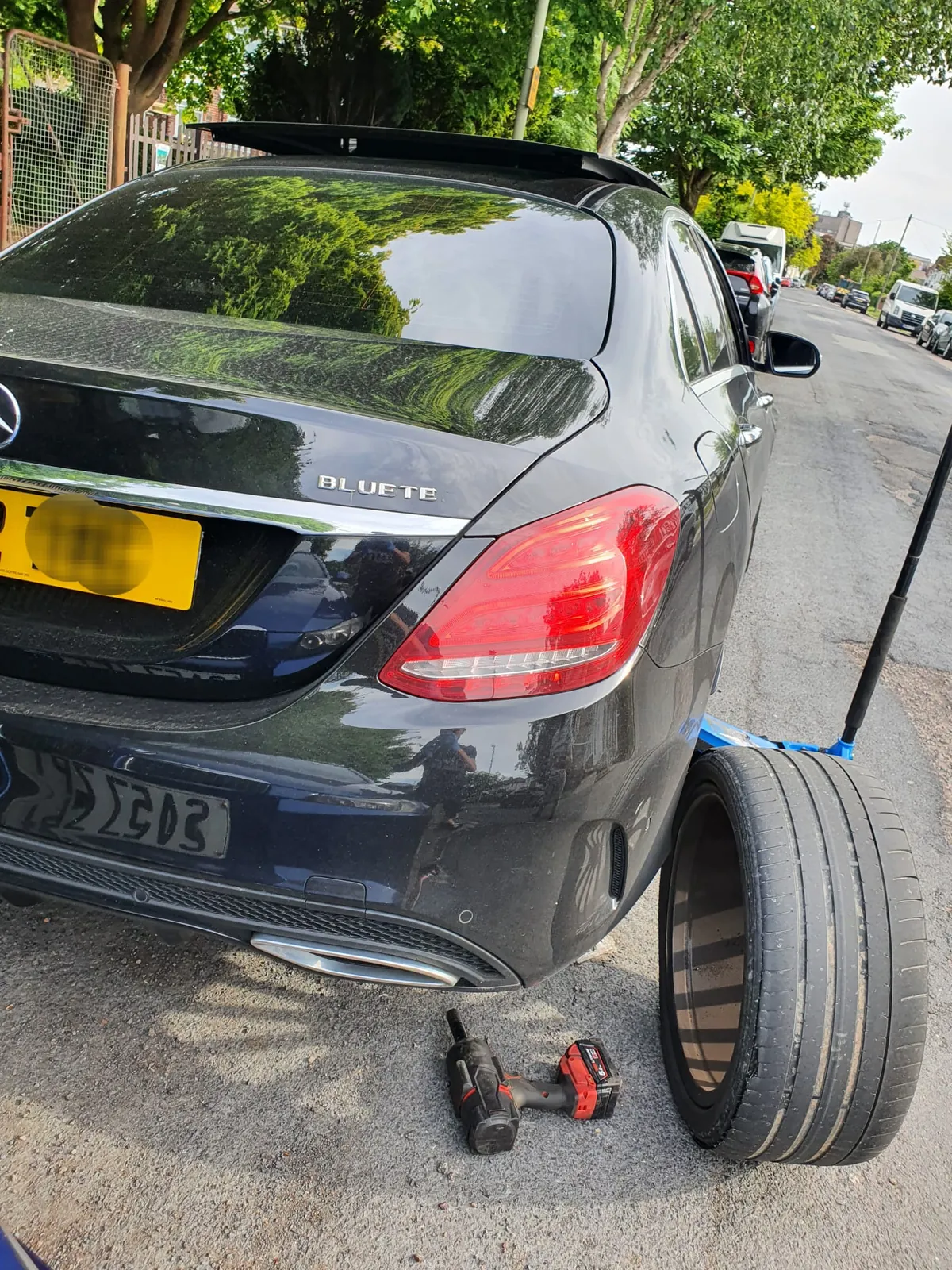
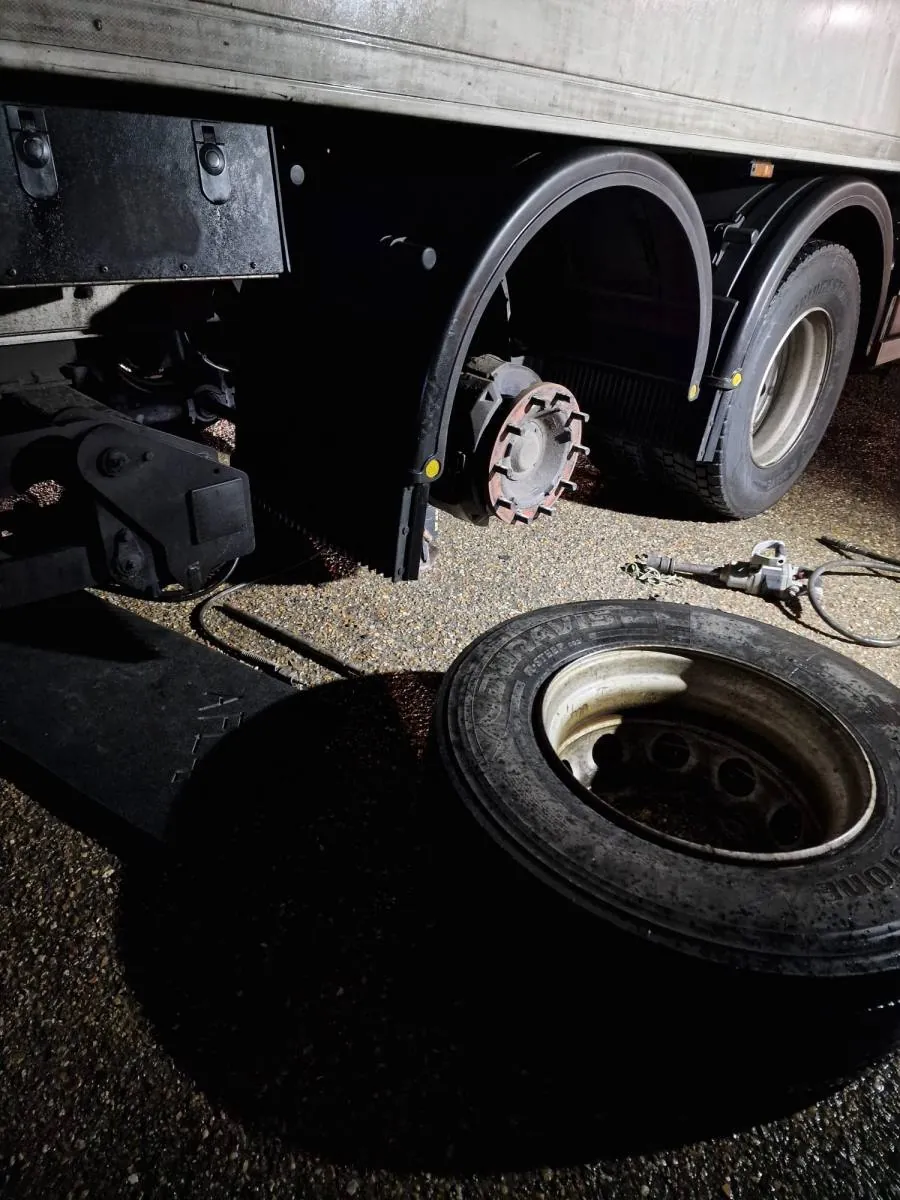
At King of Tyres, our mobile tyre technicians come directly to your location, assess the damaged tyre and determine whether it can be safely repaired or needs replacing. Our mobile puncture-repair service is designed to get drivers moving again without first having to get a damaged vehicle to a garage.
This guide answers four of the questions we hear most frequently:
- Can a mobile tyre fitter repair a puncture?
- Can a tyre sidewall puncture be repaired?
- How do I know whether my tyre needs repairing or replacing?
- Can a slow puncture be repaired?
More importantly, we will explain why some punctures can be saved and why others should never be repaired.
The Nail in Your Tyre Isn’t Always the Real Problem
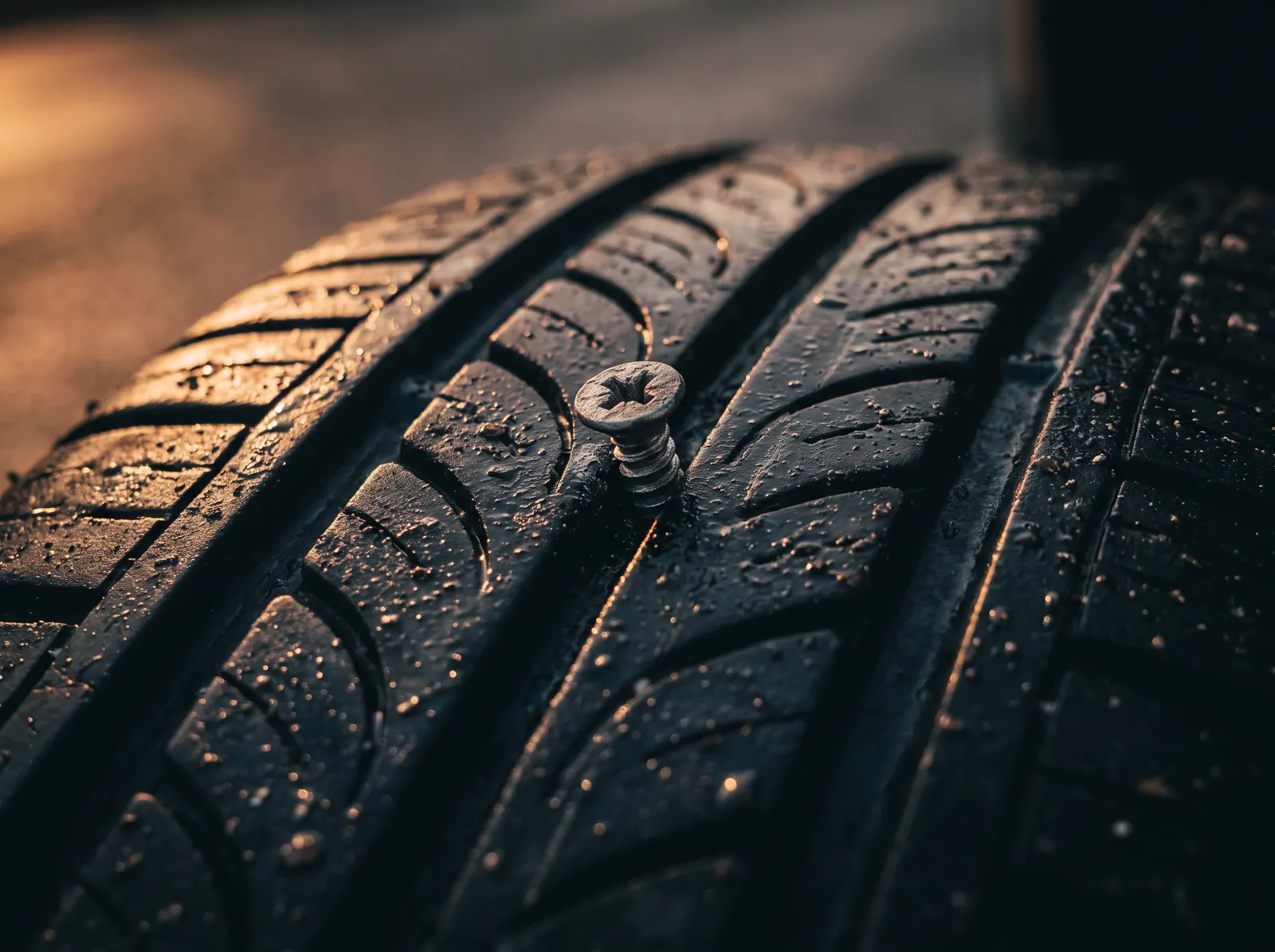
Imagine noticing a screw embedded in the centre of your tyre.
Your first instinct might be to pull it out.
Don’t.
The screw may currently be slowing the escape of air. Removing it can turn a slow leak into a rapidly deflating tyre.
And the visible screw does not tell us everything we need to know.
A professional needs to establish where the puncture is, how large it is and whether driving while the tyre was losing pressure has damaged the internal structure.
Michelin advises that a punctured tyre should be professionally assessed and that the tyre should be removed so that internal damage caused by running at low pressure can be identified.
That is why the safest question is not:
“Can you plug this hole?”
It is:
“Is this tyre still structurally safe to repair?”
Can a Mobile Tyre Fitter Repair a Puncture?
Yes, many tyre punctures can be repaired by a mobile tyre fitter.
The important condition is that the damage must actually be repairable.
A mobile tyre service means you do not necessarily have to arrange recovery, drive on a damaged tyre or find a way of getting the vehicle to a garage.
King of Tyres provides mobile puncture repair and tyre replacement services, with technicians travelling to the customer’s location to inspect the tyre and carry out the appropriate work.
That location might be your driveway, workplace or another suitable location where the technician can safely work. King of Tyres also operates a 24/7 mobile tyre fitting service across numerous areas of London and the surrounding region.
But being mobile does not mean every puncture gets repaired.
A responsible fitter should inspect the tyre first.
If the tyre can be safely repaired, repair may be the most economical solution.
If it cannot, replacement is the correct solution.
Saving £50 or £100 is never worth compromising the only four points of contact your vehicle has with the road.
Where Is the Puncture?
This is often the biggest factor.
Think of the tyre as having three broad areas:
The central tread area.
This is where many repairable punctures occur.
The shoulder.
This is where the tread begins curving towards the sidewall.
The sidewall.
This is the flexible vertical section running around the side of the tyre.
These areas behave very differently while you drive.
Puncture Through the Main Tread
A relatively small puncture through an appropriate part of the tread can often be repaired, assuming there is no significant internal damage and the rest of the tyre remains suitable for continued use.
Michelin states that punctures in the tread area are repairable in many cases, subject to the size and overall condition of the tyre.
This is the classic scenario where somebody has driven over a nail or screw.
However, the technician still needs to inspect the tyre rather than assuming the presence of a nail automatically means a repair.
Puncture Near the Shoulder
This is more problematic.
The shoulder is subjected to substantial flexing and structural loading as the tyre rotates.
Michelin advises that punctures in the shoulder area should not be repaired and that the tyre should instead be replaced.
So two punctures of identical size can have completely different outcomes.
One in the central tread may be repairable.
Move the same hole towards the shoulder and replacement may become necessary.
Can a Tyre Sidewall Puncture Be Repaired?
For conventional passenger-car tyres, sidewall punctures should generally be treated as requiring replacement rather than a routine puncture repair.
Why?
Because the sidewall is constantly flexing.
Every time the wheel rotates, the sidewall deforms as it carries the weight of the vehicle and absorbs movement from the road.
A puncture, cut or structural injury in this area can weaken the tyre.
Michelin specifically warns that a punctured or cut sidewall cannot normally be restored to its original deformation characteristics and therefore generally requires tyre replacement.
This is one of the most important points for drivers to understand.
A sidewall repair may look inexpensive.
That does not make it safe.
What About a Small Nick in the Sidewall?
Not every visible mark is necessarily a puncture.
Tyres regularly pick up superficial scuffs from kerbs and road debris.
What matters is how deep the damage goes.
If there is a deep cut, bulge, exposed structural material or anything suggesting the internal construction has been compromised, the tyre needs professional assessment.
DVSA material illustrates that a sidewall bulge can indicate failure of the tyre’s internal structure, with a risk of rapid deflation and loss of vehicle control.
If you are unsure, don’t diagnose it from a photograph.
Have the tyre inspected.
The Kerb Strike You Forgot About
Sometimes there is no nail.
You simply notice that one tyre is losing pressure.
Think back.
Did you hit a pothole recently?
Clip a kerb while parking?
Drive over road debris?
A tyre can sustain impact damage without immediately becoming completely flat.
The danger is assuming:
“It is still holding air, so it must be fine.”
Air pressure alone does not prove that the tyre’s structure is undamaged.
A professional tyre inspection is therefore appropriate whenever you notice unexplained pressure loss, unusual deformation or visible damage.
How Will I Know If My Tyre Needs Repairing or Replacing?
You usually cannot make the final decision reliably without inspecting the tyre.
However, there are several strong indicators.
A repair may be possible where the puncture is relatively small, located within a repairable section of the main tread, the tyre has sufficient remaining tread, the structure is undamaged and the tyre has not suffered significant damage from being driven flat.
A replacement is more likely where the puncture affects the shoulder or sidewall, there is a bulge or serious cut, the internal structure has been compromised, the tyre has been driven extensively while flat, or the tyre is already worn to the point where continuing to use it would be inappropriate. Michelin similarly advises that repairability depends on both the puncture location and whether low-pressure driving has caused additional internal damage.
What If My Tyre Is Already Worn?
This is where repair sometimes makes little economic sense.
Imagine having a repairable puncture in a tyre that is already approaching the end of its usable tread life.
Technically repairing the puncture does not restore the tread.
For cars in the UK, the legal minimum tread depth is 1.6mm across the central three-quarters of the tyre around its complete circumference. The Government’s THINK! road-safety guidance also warns that insufficient tread adversely affects grip, braking and steering.
You should therefore look at the complete condition of the tyre, not just the hole.
A professional fitter may reasonably recommend replacement when repairing a heavily worn tyre would simply postpone an inevitable replacement.
Can You Repair a Slow Puncture?
Often, yes. But first you need to find out what is actually causing the pressure loss.
A slow puncture is simply a gradual loss of air.
You might notice that the tyre needs inflating every week.
Or your tyre-pressure monitoring system might repeatedly warn you that the same wheel is low.
The temptation is to keep adding air.
That is not a repair.
There may be a nail or screw creating a small leak, but slow pressure loss can also arise from problems elsewhere around the tyre and wheel assembly.
The correct first step is diagnosis.
If the source turns out to be a small, repairable puncture in an appropriate part of the tread and the tyre has not suffered structural damage, a repair may be possible.
If the leak is associated with non-repairable tyre damage, replacement may be required.
King of Tyres’ mobile puncture service is designed around assessing the damage at the vehicle’s location before determining the appropriate repair or replacement.
“It Only Loses Two PSI a Week. Can I Ignore It?”
No.
A recurring loss of pressure means something needs investigating.
You should not normalise repeatedly inflating the same tyre.
Underinflated tyres can negatively affect steering, braking, fuel efficiency and tyre life. UK Government road-safety guidance specifically warns motorists about the effects of driving with incorrect tyre pressure.
More importantly, continuing to drive with insufficient pressure can create additional tyre damage.
A puncture that might initially have been repairable could become a tyre that needs replacing because it has subsequently been driven while significantly underinflated.
Michelin warns that running a punctured tyre at low pressure can damage the tyre’s overall structure.
So the cheapest approach is often:
Deal with the slow puncture early.
Can I Drive on a Punctured Tyre to Get to a Garage?
This is where drivers frequently turn a small problem into an expensive one.
If the tyre is substantially deflated, driving on it can damage the sidewall and internal construction.
Michelin advises motorists not to continue driving on a flat tyre because the tyre can rupture and the vehicle may no longer handle normally.
Even a relatively short distance may cause additional damage depending on tyre type, pressure, vehicle load and road conditions.
That is exactly where mobile tyre fitting becomes valuable.
Instead of taking the damaged tyre to the fitter, the fitter comes to the damaged tyre.
King of Tyres offers mobile tyre fitting and puncture-repair services designed to assist motorists at their location.
What If I Have a Tyre Sealant Kit?
Many modern cars no longer have a full-size spare wheel.
Instead, they may contain an emergency inflation or sealant kit.
These products can be useful in particular emergency situations, but they should not automatically be treated as a permanent tyre repair.
Michelin describes tyre sealant as an emergency puncture solution supplied in many vehicles instead of a spare wheel.
After using one, the tyre should still be professionally assessed.
The important distinction is:
Getting moving temporarily is not the same as proving the tyre is permanently safe.
Repair or Replace? Four Real-World Examples
Scenario 1: A Screw in the Centre of the Tread
You park the car overnight and discover the rear tyre is slightly low in the morning.
There is a small screw through the main tread.
This may be a good candidate for repair, assuming inspection confirms that the damage is within an acceptable repair area and the tyre has not been damaged internally.
Likely outcome: assess for repair.
Scenario 2: Nail Through the Sidewall
The hole appears tiny.
You think repairing it should be easy.
But because the sidewall continually flexes and carries structural loads, the location changes the decision.
Likely outcome: replacement.
Scenario 3: Repairable Puncture, Nearly Worn-Out Tyre
The puncture itself might be repairable.
But the tyre is already close to the end of its useful tread life.
Spending money repairing it may make little sense if replacement will shortly be necessary anyway.
Likely outcome: assess overall tyre condition before deciding.
Scenario 4: Slow Leak for Three Weeks
You have inflated the tyre four times.
You cannot see a nail.
This requires leak diagnosis rather than repeated inflation.
Likely outcome: inspect first, then repair or replace according to the cause.
Why the Inside of the Tyre Matters
You can see the outside.
The technician needs to know what has happened inside.
Driving on a heavily underinflated tyre can damage the internal structure even though the outside does not initially appear catastrophic.
That is why proper professional assessment is important.
Michelin specifically states that a punctured tyre should be removed where necessary to check for internal damage caused by low-pressure running.
This is also why quick DIY assumptions can be risky.
A puncture is not simply a hole that needs filling.
The tyre remains a highly stressed structural component travelling at motorway speeds while carrying a substantial proportion of the vehicle’s weight.
Why Use a Mobile Tyre Fitter?
The traditional puncture problem creates an awkward contradiction.
Your tyre needs professional attention.
But the tyre is the very thing you need in order to drive to the professional.
Mobile tyre fitting solves that problem.
King of Tyres brings tyre repair and replacement services directly to customers, helping motorists avoid unnecessary journeys on damaged tyres. The company currently operates mobile services across areas including Edgware, Harrow, Wembley, Watford, Stanmore, Mill Hill, Finchley, Hendon, Barnet, St Albans, Luton, Ealing, Enfield and surrounding locations, as well as assistance around the M1 and M25.
That means the process can be straightforward:
You discover the problem.
We inspect the tyre.
If it can be safely repaired, we repair it.
If it needs replacing, we fit the appropriate replacement.
You get back on the road.
Don’t Let a £5 Nail Become a Ruined Tyre
One of the most frustrating things about punctures is that the object causing the problem can be tiny.
A nail.
A screw.
A sharp piece of road debris.
The real expense often comes later when the driver ignores the pressure loss and continues driving.
That can turn a potentially repairable tread puncture into a structurally damaged tyre requiring replacement.
So if your tyre-pressure warning keeps returning, your vehicle pulls differently, a tyre looks lower than the others or you know there is an object embedded in the tread, have it checked.
The sooner the problem is professionally assessed, the better the chance of avoiding further damage.
Punctured Tyre? Let King of Tyres Come to You
A puncture is inconvenient.
Getting it dealt with does not have to be.
King of Tyres provides mobile tyre puncture repair and mobile tyre replacement, bringing professional tyre assistance directly to drivers rather than requiring them to risk driving a damaged vehicle to a garage.
Our priority is not simply to keep the existing tyre at any cost.
It is to identify the safe solution.
If the tyre can be repaired correctly, we can help repair it.
If the location or extent of the damage makes repair inappropriate, we can replace it.
Because when it comes to tyres, the right question is never:
“What is the cheapest way to make the warning light disappear?”
It is:
“What gets me safely back on the road?”
That’s where King of Tyres can help.
Frequently Asked Questions About Tyre Puncture Repairs
Can a mobile tyre fitter repair a puncture?
Yes. A mobile tyre fitter can repair many punctures at your location where the puncture is in an appropriate repairable area and the tyre remains structurally sound. King of Tyres provides mobile puncture-repair services and assesses the damage before determining whether repair or replacement is appropriate.
Can a tyre sidewall puncture be repaired?
A sidewall puncture on a conventional passenger-car tyre should generally not be treated as a routine repair. Sidewall damage can compromise an area of the tyre that continually flexes while driving, and tyre replacement is generally the appropriate option.
Can a slow puncture be repaired?
Often, yes, if the cause is a repairable tread puncture and the tyre has not suffered additional structural damage. The first step is identifying where the air is escaping.
Should I remove a nail from my tyre?
It is generally better to leave an embedded object in place until the tyre can be professionally inspected. Removing it may accelerate the loss of air.
Can I keep driving with a slow puncture?
You should have persistent pressure loss investigated rather than repeatedly inflating the tyre. Driving underinflated can affect vehicle handling and may damage the tyre further.
Does a puncture always mean I need a new tyre?
No. Many punctures in suitable areas of the tread can be repairable. The puncture location, size, tyre condition and any internal damage all need to be considered.
When should a punctured tyre be replaced instead of repaired?
Replacement is more likely when damage is in the sidewall or shoulder, the tyre has structural damage, there is a bulge or serious cut, the tyre has been damaged from running flat, or its overall condition means continued use is inappropriate.
What is the legal minimum tyre tread depth in the UK?
For ordinary car tyres, the legal minimum is 1.6mm across the central three-quarters of the tread around the entire circumference.
Can King of Tyres come to my home or workplace?
Yes. King of Tyres operates a mobile tyre fitting service, bringing repair and replacement equipment to customers rather than requiring the vehicle to be taken to a conventional tyre garage.
Does King of Tyres offer emergency mobile tyre fitting?
Yes. King of Tyres advertises 24/7 mobile tyre fitting and emergency tyre assistance across its service area.